
Pick up any salmon angler's lure box in Ballymena and you'll find the same three things rattling around: a handful of spinners, a few spoons, and at least one plug tucked in the corner for when the water comes up. That's the honest answer to "what are the best salmon lures?" There's no single miracle lure. What works depends on river height and water colour on the day you're fishing, and once you understand that logic, picking tackle becomes straightforward.
I've put this guide together to cut through the noise you'll find online. Most advice about salmon lures is written for Pacific salmon trolling off Alaska or landlocked lakes in North America, which has little bearing on spinning a river in County Antrim or along the Bann. This guide focuses on Atlantic salmon in UK and Irish rivers, organised the way I'd explain it to someone standing at the tackle counter.
How River Conditions Shape Your Lure Choice
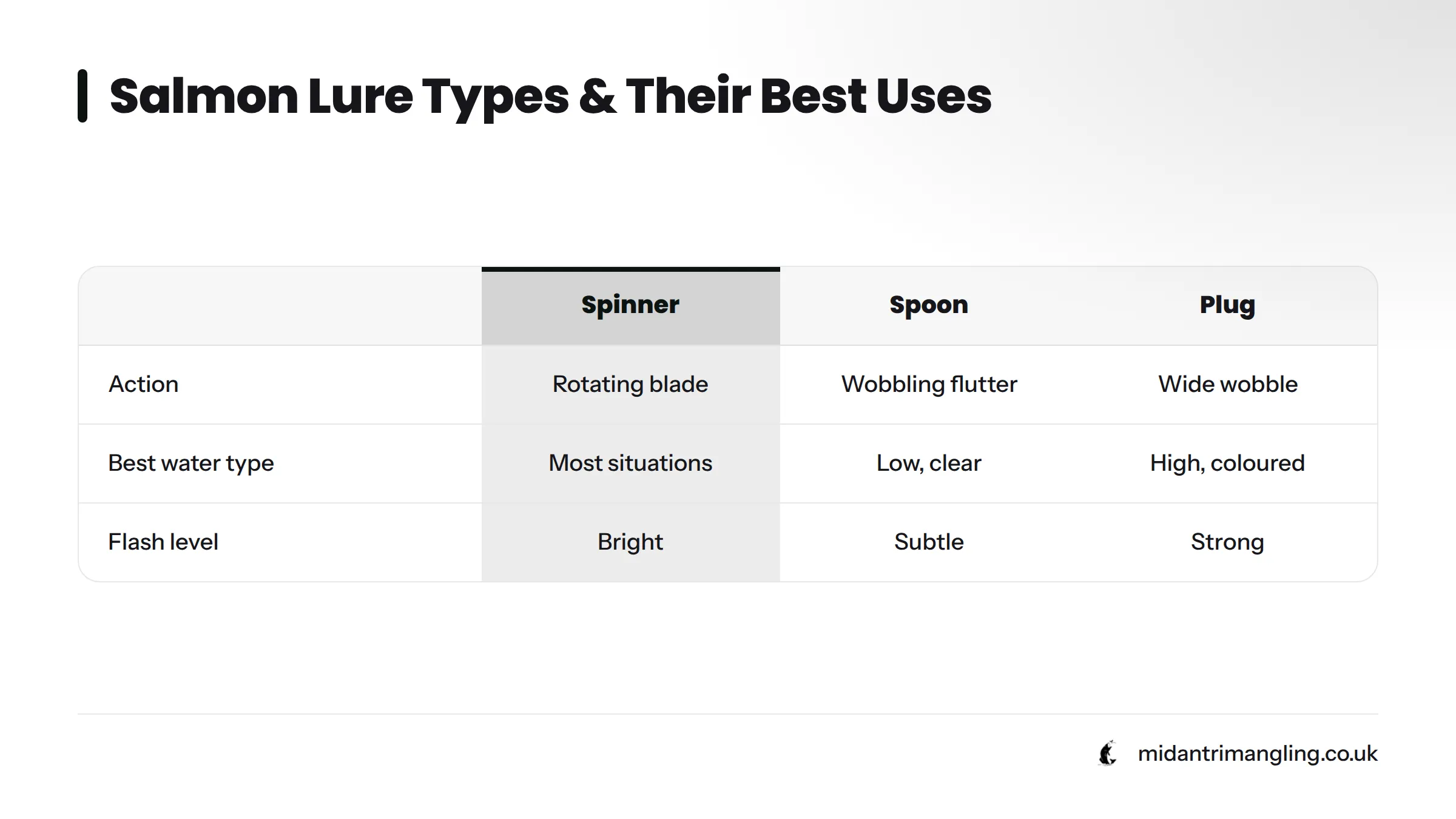
The best salmon lures for 2026 fall into three main families: spinners, spoons, and plugs. Each suits different river conditions. Spinners work across most situations and are where most experienced anglers start. Spoons come into their own in low, clear water where a subtler flash avoids spooking fish. Plugs and larger wobbling lures earn their place in high, coloured water where salmon need to see and feel bigger disturbance to find the lure.
Let me be clear on what each actually is, because the names get used loosely:
- Spinner - a lure with a rotating blade that spins around a central shaft, creating flash and vibration as you retrieve it. The all-round choice for most salmon conditions.
- Spoon - a shaped, concave piece of metal that wobbles and flutters through the water rather than spinning. Generally subtler in action than a spinner.
- Plug - a shaped, often hollow lure with a diving lip that creates a wide wobbling action and holds depth on the retrieve. Effective for pushing a bigger profile through coloured water.
- Devon minnow - a torpedo-shaped lure, usually metal or plastic, with fins that spin the whole body as it moves. A traditional choice that still works well, particularly in faster or deeper water.
- Tasmanian Devil - a winged, buoyant lure developed in Australia and now popular among salmon and trout anglers for its erratic darting action, often fished on a slow retrieve or trolled.
If you only buy three salmon lures this season, get a mid-weight spinner for general use, a Tasmanian Devil or small spoon for clear low water, and a bigger wobbling plug or Devon minnow for when the river comes up and carries colour.
How I've Picked These Lures
I've based these choices on how each type performs against the conditions that actually decide your day: river height, water clarity, casting ability, depth holding, versatility across different Irish and UK rivers, and value. This isn't a lab test with numbers attached to every lure. It's practical knowledge from the shop floor and riverbank, shaped by being based in Ballymena close to some of Northern Ireland's main Atlantic salmon systems, and by stocking and discussing this tackle with customers every season.
This guide focuses strictly on lure selection. For techniques and presentation once you've got the right lure tied on, our guide on how to fish lures for salmon covers that in detail. If bait fishing is your approach on a given day, there's a separate guide to best salmon bait as well.
Best Overall Salmon Spinner
For an all-round choice that earns its place in every box, a well-made rotating spinner in the 14 to 21 gram range is hard to beat. It casts well, works at a range of retrieve speeds, and gives salmon the flash and vibration they respond to across clear, moderate, and slightly coloured water. This versatility is exactly why spinners are the first lure most experienced salmon anglers reach for when they're unsure what the river will demand.
A good spinner needs a blade that starts turning almost immediately it hits the water, a shaft strong enough to handle a big fish without bending, and a treble hook sized sensibly to the lure rather than oversized for appearance. You'll find a solid range of these in our salmon spinners collection, where I'd point anyone building a core selection for the season.
Best Salmon Spoon for Clear, Low Water
When a river drops and clears, salmon become wary, and this is where a smaller, subtler spoon comes into its own. A Tasmanian Devil in a natural or lightly coloured finish is a strong choice. Its darting, erratic action gives just enough movement to trigger interest without the heavy flash of a big spinner blade, which can spook fish holding in skinny, clear pools.
Lighter spoons in the 7 to 14 gram range suit this water well, letting you work a pool thoroughly without powering through it too aggressively. You'll find these alongside other options in our Tasmanian Devil spoons collection, which has become a genuinely popular low water choice with customers over recent seasons.
Best Salmon Plug for Coloured, High Water
Once a river comes up and carries colour after rain, everything changes. Salmon can't see as far, and a small subtle lure simply won't be noticed. This is when a bigger, wobbling plug with a pronounced action earns its place. A plug with a deep-diving lip pushes plenty of water and holds its depth well, which matters when fish are sitting lower in the water column and the current has shifted them off their usual low-water positions.
Treble hooks on plugs run larger than on spinners, matched to the bulkier body. It's worth checking that the trebles are sharp and in good condition before you tie one on - a blunt hook on a lure this size is an easy way to lose a good fish. Slow your retrieve a touch in coloured water too, giving the lure's action and vibration more time to be felt rather than just seen.
Best Budget Salmon Lure
Not every lure needs to be expensive to work, and I'd always recommend newer anglers build a varied box rather than spending heavily on one or two premium pieces. A simple, well-made spinner in a mid weight is the sensible budget choice: it covers a broad range of conditions, is cheap enough to lose a couple without wincing, and does the job that matters - presenting flash and vibration to a willing fish. This is also the lure I'd suggest keeping a spare of in the bottom of the bag, since snagging on a riverbed or losing one to a fish that comes unstuck is part of lure fishing.
Best Salmon Lure for Deep Pools and Holding Water
Deep, slow-moving pools are where salmon often sit for long periods, particularly in low summer flows or during drought spells. Getting a lure down to them without constantly snagging bottom takes care. A heavier spoon or a Devon minnow in the 21 to 28 gram range is generally the right tool. The extra weight gets the lure down into the taking zone quickly and keeps it fishing at depth through the retrieve, rather than skating near the surface.
Devon minnows in particular have long been a favourite for deep, steady pools because their spinning action works well at a slower pace, giving fish in holding water time to react without the lure rushing past them. If you're new to fishing deep pools, start heavier than you think you need and work lighter from there - a lure that's too light simply won't reach where the fish are lying.
This video is a useful visual reference for how a spoon behaves in the water, even though it's filmed on Lake Ontario rather than a UK or Irish river:
Matching Your Lure to River Height and Colour
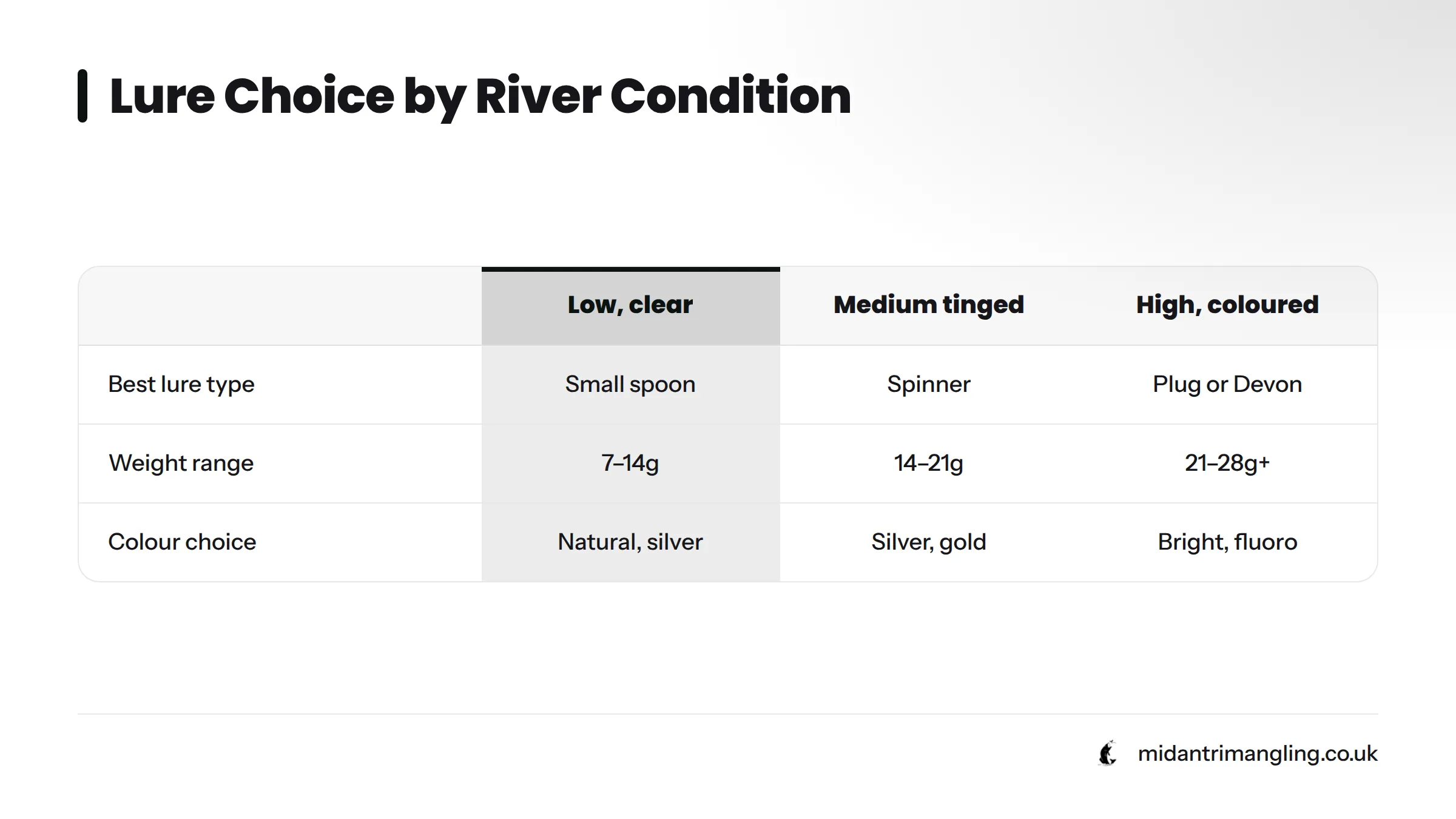
This is really the heart of the whole decision, and it's the bit most lure guides skip entirely. Once you know the height and colour of the river you're fishing, picking a lure stops being guesswork.
| River Condition | Best Lure Type | Typical Weight | Lure Colour |
|---|---|---|---|
| Low, clear water | Small spoon or Tasmanian Devil | 7-14g | Natural, silver, or subtle muted tones |
| Medium, slightly tinged water | Spinner | 14-21g | Silver, gold, or mixed colour blade |
| High, coloured water | Plug or larger Devon minnow | 21-28g+ | Bright orange, yellow, or fluorescent finishes |
| Deep, slow holding pools | Heavier spoon or Devon minnow | 21-28g | Gold or darker natural tones |
As a rule of thumb, the murkier the water, the brighter and bigger the lure needs to be so salmon can find it by vibration and silhouette rather than fine detail. In gin-clear low water, the opposite applies: go smaller, more natural, and let subtlety do the work.
Before you fish, check:
- The current river height and whether it's rising, falling, or steady
- Water clarity: can you see the riverbed in a foot or so of water, or is it carrying colour?
- Local byelaws and whether lure fishing is permitted on that stretch and at that time of year
- Whether you need a weight heavy enough to reach the taking depth in that particular pool
Rules and Licences Vary by River
Lure fishing rules for salmon are not the same on every river, and this catches out more anglers than you'd expect. Permitted lure types, hook restrictions, closed seasons, and licensing requirements vary by river system and by jurisdiction across the UK and Ireland. In Northern Ireland, salmon fishing requires a rod licence from the Department of Agriculture, Environment and Rural Affairs (DAERA), alongside any permit needed for the specific water, and byelaws can restrict things like hook type or lure use on certain rivers. In the Republic of Ireland, Inland Fisheries Ireland sets the licensing and byelaw framework river by river. Check the specific rules for your river before you go, rather than assuming what applied last season or on a different river still applies this one.
Frequently Asked Questions
What is the best lure for salmon? There isn't one single best lure for every situation. A mid-weight spinner is the most versatile all-round choice, but the right pick depends on river height and water colour on the day, which is why this guide breaks down options by condition rather than naming one winner.
What colour lure is best for salmon? In clear, low water, natural, silver, or muted tones tend to work best since salmon can see fine detail and subtlety matters. In high, coloured water, brighter finishes such as orange, yellow, or fluorescent colours help fish locate the lure by silhouette and vibration when visibility is poor.
Is lure fishing for salmon allowed everywhere? No. Lure fishing permissions, hook restrictions, and seasons vary by river and jurisdiction across the UK and Ireland, so it's worth checking the specific rules for your river with the relevant licensing body, such as DAERA in Northern Ireland or Inland Fisheries Ireland in the Republic, before you fish.
What size treble hook is used on salmon lures? Treble hook size scales with the lure itself rather than being fixed. Smaller spinners and spoons for clear water typically carry smaller trebles, while larger plugs and heavier Devon minnows for coloured or deep water carry proportionally bigger trebles to match the bulkier lure body.
How heavy should a salmon lure be for deep pools? For deep, slow-moving holding water, a heavier lure in the 21 to 28 gram range generally gets down to the taking depth without being swept through too quickly. Starting a little heavier than you think necessary and adjusting lighter is a sensible approach if you're unsure.
Build Your Box and Keep Learning
That's the shortlist: a versatile spinner for most days, a subtle spoon or Tasmanian Devil for clear low water, a bigger plug or Devon minnow for coloured high water, a budget-friendly spinner for building out your box, and heavier options for deep holding pools. Match the lure to the river in front of you rather than chasing whatever's trending, and you'll catch more fish for less wasted casting.
You can browse the full fishing lures collection to see everything currently in stock. If fly fishing is also part of your season, our Best Fly Lines 2026: Complete Guide for Every Style is worth reading too. For more on the techniques that make these lures actually produce fish once they're tied on, head to our guide on how to fish lures for salmon. Whatever's in your box this season, I hope it's a good one on the bank.


