
I've been selling Greys tackle in Ballymena for a long time now, and I still get the same question across the counter most weeks: what's actually good in the Greys range, and which one do you need? Greys fly rods, reels and the Lance range cover everything from a first trout outfit to serious double-hand salmon work. In this guide I'll walk you through the ranges, explain the Lance properly, show you how to match a reel to a rod, and point you towards what suits your own fishing.
What Greys Tackle Covers, and Who It Suits
Greys is a long-established fly fishing tackle brand with roots in Alnwick, Northumberland, the same town that gave rise to its sibling brand Hardy, another well-known name in UK fly fishing. Greys focuses on fly rods, fly reels and related tackle built for anglers who fish rivers, stillwaters and estuaries, rather than coarse or sea anglers using bait or lure gear.
In my experience behind the counter, Greys attracts a genuinely wide spread of customers. I see trout anglers heading to Lough Erne or the local stillwater fisheries, river anglers working the Bann and its tributaries, and salmon fishers who want a double-hand rod capable of covering a big pool without breaking the bank. The brand sits in that sensible middle ground: well-made enough for anglers who know what they're doing, but not so expensive that a beginner feels they're taking a risk on their first real fly outfit.
The Greys Fly Rod Ranges at a Glance
Greys structures its rod ranges the way most tackle manufacturers do, running from accessible, do-everything rods through to more refined, higher-specification blanks aimed at anglers who already know what action and line weight suit their fishing. You'll find rods built for small stillwaters and rivers, rods built for bigger stillwater reservoir work, and double-hand rods built for salmon and sea trout. For the full breakdown of every current rod in the lineup and which one suits which style of fishing, our Greys rod range guide covers it model by model.
Single-Hand vs Double-Hand Greys Rods
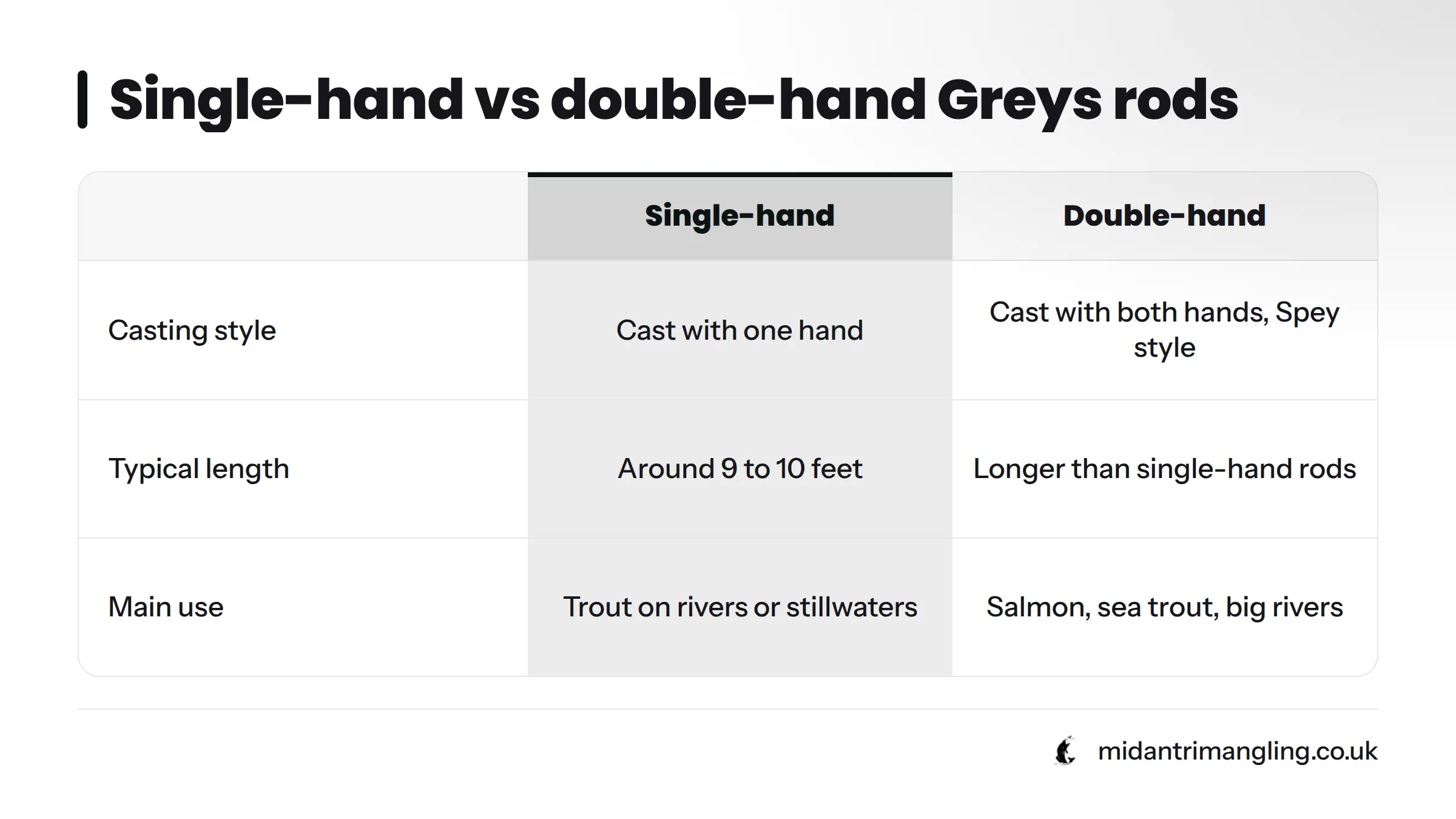
A single-hand rod is what most trout and river anglers picture when they think of a fly rod: cast with one hand, typically nine to ten feet long, and suited to everything from small streams to big stillwaters depending on the line weight. A double-hand rod, often called a Spey rod, is longer, cast with both hands using a two-handed casting stroke, and built mainly for salmon, sea trout and bigger rivers where you need distance and line control that a single-hand rod simply can't deliver. If your fishing is mostly trout on rivers or lakes, you want a single-hand rod. If you're after salmon on a wide river or want to Spey cast on open water, you're in double-hand territory.
Line Weight (#AFTM) and Rod Action, Explained
Line weight, marked as #AFTM (Association of Fishing Tackle Manufacturers) on every fly rod, tells you which weight of fly line the rod is designed to cast. It runs on a numbered scale, generally from around #3 for delicate small-stream trout work up to #10 or higher for salmon and saltwater species. Rod action describes how the blank bends under load. A fast action rod flexes mainly in the top third and suits longer casts and windier conditions. A medium action rod bends further down the blank, giving a softer feel that many anglers find easier to load at close range and gentler on light tippets.
Quick definitions, in plain terms:
- Line weight (#AFTM): the numbered rating that matches a rod to the correct fly line, from light (#3-#5, trout) to heavy (#8 and above, salmon or saltwater)
- Rod action: how much of the blank bends when casting, running from medium (softer, more forgiving) to fast (stiffer, more powerful)
- Rod length: typically 9-10ft for single-hand trout rods, 11-15ft for double-hand salmon and sea trout rods
Greys Lance Fly Rods Explained
The Lance is one of the better-known names in the Greys lineup, and it's a range I get asked about constantly. It's built as an accessible, genuinely capable fly rod rather than a stripped-down budget option, which is why it's earned a strong reputation among anglers who want a reliable all-rounder without stepping up to a premium price bracket. You'll find the Lance offered across a spread of line weights and lengths, so it covers both single-hand trout and river work and heavier double-hand configurations for salmon fishing.
What I'd say to anyone asking whether the Lance suits them is this: it tends to work well for anglers who want one dependable rod that handles a good range of conditions, rather than someone building a specialist quiver of three or four different actions for very specific situations. If you're newer to fly fishing, or you want a second rod that won't sit in the cupboard because it's too specialised, the Lance is worth a proper look. For the full detail on the line weights available and how it performs across different styles of fishing, our verdict on the Greys Lance sets it against the rest of the current Greys range.
A few independent reviewers have put the Lance through its paces on camera, and it's worth watching one if you want to see the action in hand before you buy.
Greys Fly Reels: Matching a Reel to Your Rod
A fly reel's main job, beyond simply storing line, is controlling a running fish through its drag system. The drag applies adjustable resistance to the spool, so when a fish makes a run the reel pays out line smoothly rather than jerking or snapping light tippet. On a small stillwater trout, you might barely use the drag at all. On a hard-fighting salmon or a bonefish on the flats, a smooth, reliable drag is what keeps you connected.
Balance between rod and reel matters more than most beginners expect. A reel that's too light for its rod leaves the outfit feeling tip-heavy and tiring to cast all day, while a reel that's too heavy drags the whole setup down and throws off your casting rhythm. The general rule is straightforward: match the reel's rated line weight to the rod's #AFTM rating, so a #6 reel goes on a #6 rod, not a #5 or a #8. Our full guide to choosing the right Greys fly reel goes into this in more depth if you want to get the pairing exactly right before you buy.
Freshwater vs Saltwater Reel Considerations
Freshwater reels for trout and grayling generally need a lighter build and a reliable but modest drag, since the species you're targeting rarely make long, powerful runs. Saltwater fly fishing, and heavier freshwater species like salmon, demand more from a reel: better corrosion resistance against salt exposure, and a stronger, more consistent drag system that can handle sustained pressure without overheating or slipping. If you're planning any saltwater fly fishing, check a reel's sealed drag and corrosion-resistant finish before you commit, rather than assuming any reel will do the job.
Which Greys Range Suits Your Fishing?
Picking the right range comes down to being honest with yourself about three things: your experience, your budget, and the water you actually fish most often. Here's the checklist I'd run through with anyone standing at the counter trying to decide.
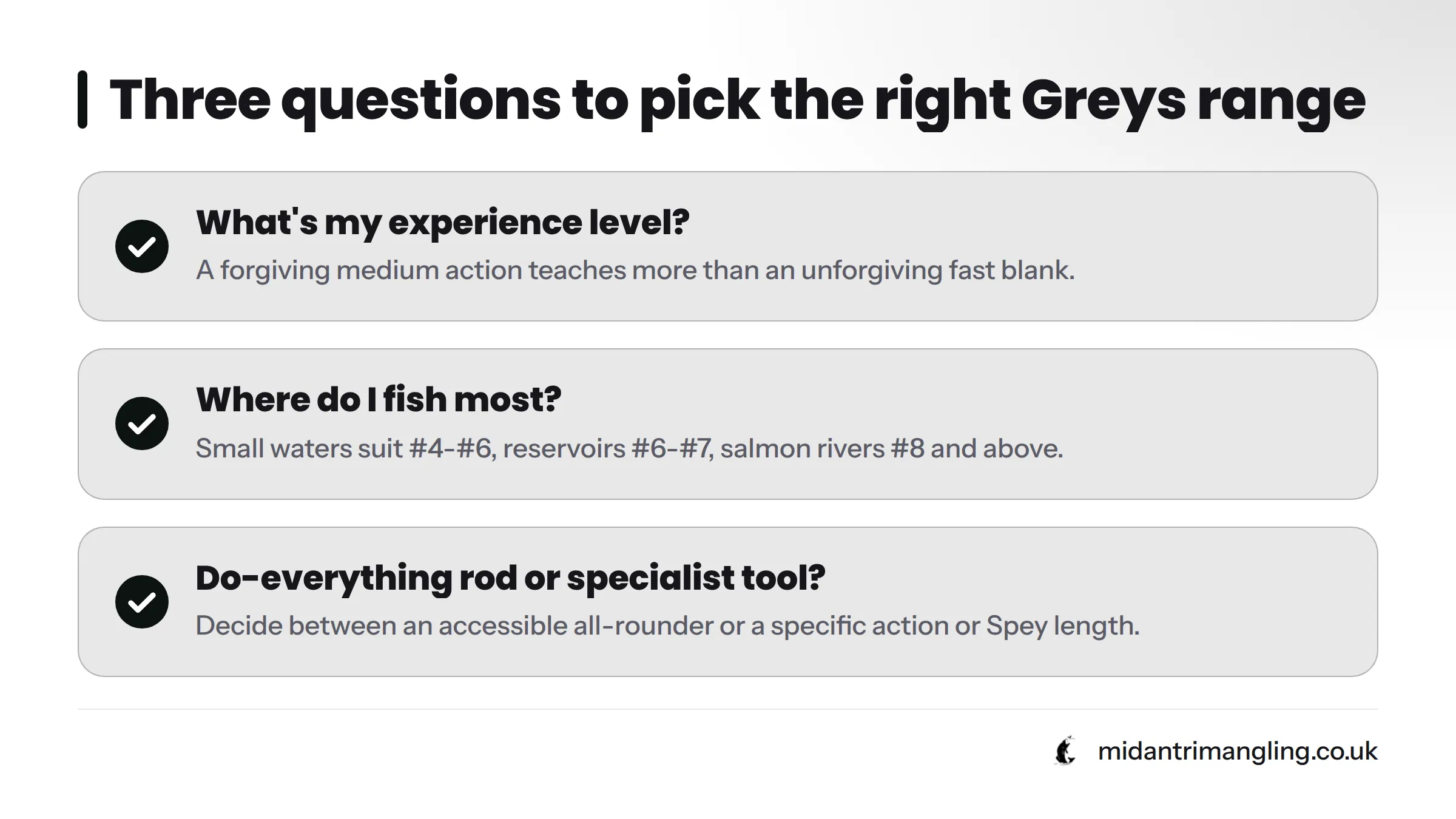
Ask yourself these three questions before choosing a Greys rod:
- What's my experience level? If you're newer to fly fishing, an accessible, forgiving rod with a medium action will teach you more than a fast, unforgiving blank that punishes a slightly late cast.
- Where do I fish most? Small stillwaters and rivers call for a lighter single-hand rod around #4-#6. Bigger reservoirs or distance casting favour a slightly heavier #6-#7. Salmon rivers point you towards a double-hand rod in #8 and above.
- Do I want one do-everything rod or a specialist tool? If you want a single rod that handles most situations reasonably well, look at an accessible all-rounder. If you already know you need a fast action for long-distance stillwater work or a particular Spey length for a named river, you're ready for a more specific choice.
Once you've got honest answers to those three, picking between an entry-level and a more premium Greys rod becomes far easier, because you're choosing based on what you'll actually do with it rather than guessing.
Greys Rod and Reel Pairings Our Customers Choose by Season
This next bit comes from what we actually see over the counter in Ballymena, not a manufacturer's claim, so take it as a reflection of buying patterns among our own customers rather than a universal rule for every angler in the country.
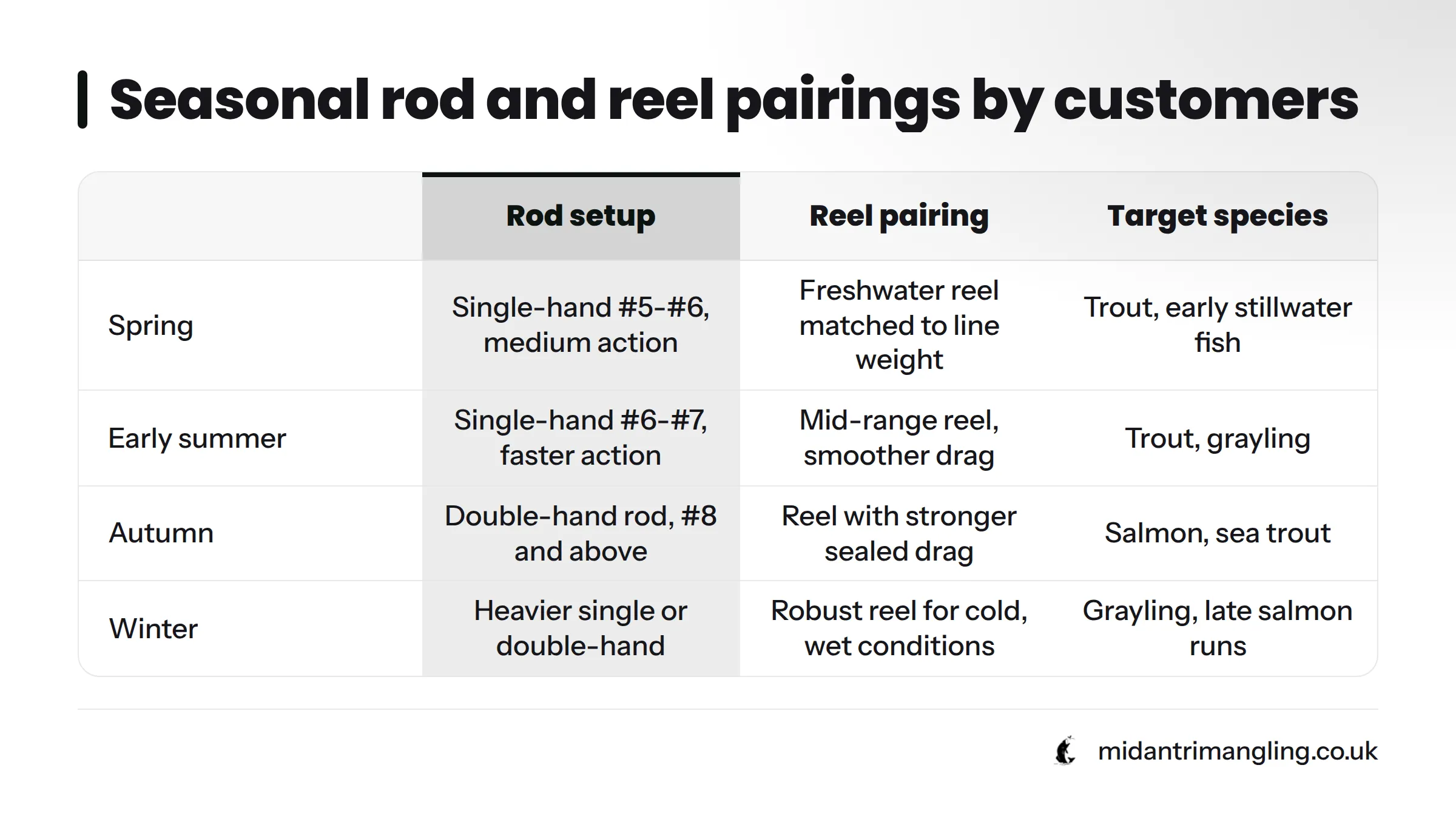
| Season | Typical rod setup | Typical reel pairing | Common target species |
|---|---|---|---|
| Spring | Lighter single-hand, #5-#6, medium action | Freshwater reel matched to line weight | Trout, early stillwater fish |
| Early summer | Single-hand #6-#7, slightly faster action | Mid-range freshwater reel with smoother drag | Trout, grayling |
| Autumn | Double-hand rod, #8 and above | Reel with stronger, sealed drag | Salmon, sea trout |
| Winter | Heavier single-hand or double-hand, depending on venue | Robust reel built for colder, wetter conditions | Grayling, late salmon runs |
What stands out most is how many customers come in during autumn specifically asking about double-hand setups for salmon, having fished a lighter single-hand rod all spring and summer. It's a natural progression once an angler gets properly hooked on the sport, and it's one of the reasons I'd always encourage a first-time buyer to start lighter rather than over-buying for a style of fishing they haven't tried yet.
Buying Greys Tackle at Mid Antrim Angling
We stock Greys tackle both in our Ballymena store and through our online shop, and every member of staff handling these rods and reels can talk you through the range face to face or over the phone if you're not local. If you'd rather shop online, you can browse Greys fly rods and Lance rods directly, along with our range of Greys fly fishing reels in stock, both kept up to date as new stock arrives.
We also offer UK delivery and free shipping over £50, and run a price match policy on Greys products, so if you've seen the same item cheaper elsewhere, it's worth asking us before you buy. Beyond Greys, we stock other premium fly fishing brands too, including Hardy, so if you want to compare before deciding, our staff can set that out honestly rather than just pushing one name.
If you're still weighing up your first outfit, it's worth reading our review of the Greys Cruise fly combo to see whether a ready-matched rod and reel set might suit you better than buying separately. Our guide to choosing the right fly line is worth a read too, since the line you put on a rod affects how it performs every bit as much as the rod itself.
If you want to see the GRXi+, one of the best-selling rods in the current Greys lineup, explained by the people who designed it, this short video from Greys is worth five minutes of your time.
Explore Greys Ranges and Guides
If you want to go further than this guide covers, we've built out a small cluster of pages specifically on Greys tackle and related buying decisions:
- How the Greys rod range is organised, covering every current model and who it suits
- Greys Cruise fly combo review, for anyone considering a matched beginner outfit
- Best fly lines guide, for getting the line-to-rod pairing right
- Frankie McPhillips flies review, if you're sorting your fly box alongside a new rod
- Bann Valley flies review, another Irish-tied fly option worth knowing about
And if tackle brands in general interest you beyond Greys, our full Mid Antrim Angling site carries the rest of our range and store information.
Frequently Asked Questions
Does Mid Antrim Angling stock Greys tackle? Yes. We carry Greys fly rods, Lance rods and Greys fly reels both in our Ballymena store and on our online shop, with staff available to advise on the right choice for your fishing.
Which Greys rod is best for a beginner? For most beginners, a forgiving, medium-action single-hand rod in a lighter line weight, around #5-#6, is the easiest to learn on, since it loads well at close range and punishes mistimed casts less than a fast action blank. The Greys Lance is worth considering here, and if you'd prefer a ready-matched rod and reel outfit rather than buying separately, our review of the Greys Cruise fly combo is a good next read.
Can I get Greys tackle delivered in Ireland? Yes, we deliver Greys tackle across the UK and Ireland, with free delivery available over £50. Delivery times and exact terms are covered in full on our UK delivery and free shipping over £50 page.
Do you price match Greys products? Yes, we run a price match policy on Greys tackle, so if you've found the same product cheaper elsewhere, get in touch with our team before you buy and we'll do our best to match it.


