
After over forty years fishing loughs in Antrim, rivers in Scotland, lakes across Scandinavia and Canadian waters that tested every line I owned, I've learned something that most anglers seem to get backwards: the fly line matters far more than the rod.
Walk into any tackle shop and watch anglers agonise over rod choice for hours. Ask them about their fly line, and they'll shrug. That backwards approach costs fish, because the line is what actually does the work of casting. The rod is just the tool that moves it.
Let me sort this properly. No product grids, no marketing filter. Just what fly lines are, how they work, and which one you actually need for your rod, your water and the fish you're after.
What a Fly Line Actually Does
A fly line is a thick, tapered length of coated line - usually 80 to 100 feet - designed to carry the weight needed to cast a nearly weightless artificial fly. That's the whole answer in one sentence.
Here's why it matters: in spinning or coarse fishing, the weight of the lure or bait pulls line off the reel. The line itself is thin, light and nearly invisible. Fly fishing reverses that logic completely. A dry fly weighs almost nothing, so there's nothing in the terminal tackle to pull line anywhere. The fly line has to supply all the mass needed to load the rod and deliver the fly. That's why fly line is thick, tapered and deliberately heavy compared to monofilament or braid.
Once you accept that the line is doing the heavy lifting, a lot of confusion clears up fast. The rod bends because the line's weight loads it on the back cast and forward cast. The taper of that line - where the thick section sits and how quickly it tapers down to the thin running line - determines how the energy in your cast unrolls and where the fly actually lands. Get the line wrong for the rod, and casting skill won't fix it. Get it right, and an average caster will present a fly better than a brilliant caster using the wrong line.
Understanding Fly Line Weight: The AFTM Rating
Every fly rod and fly line carries a number, usually from 000 or 1 up to about 15, that tells you how heavy the line is. This is the AFTM (Association of Fishing Tackle Manufacturers) rating - most people in the UK and Ireland just call it the "weight" or "wt". A 6wt line is heavier than a 4wt, and lighter than an 8wt. The rating is based on the grain weight of the first 30 feet of the line, which is the section that actually loads the rod during a normal cast.
The best answer to "what line weight do I need?" is simple: match the number on your rod to the number on the line box. A rod marked #6 wants a 6wt line. That's how straightforward it is for the vast majority of situations.
Matching line weight to your rod
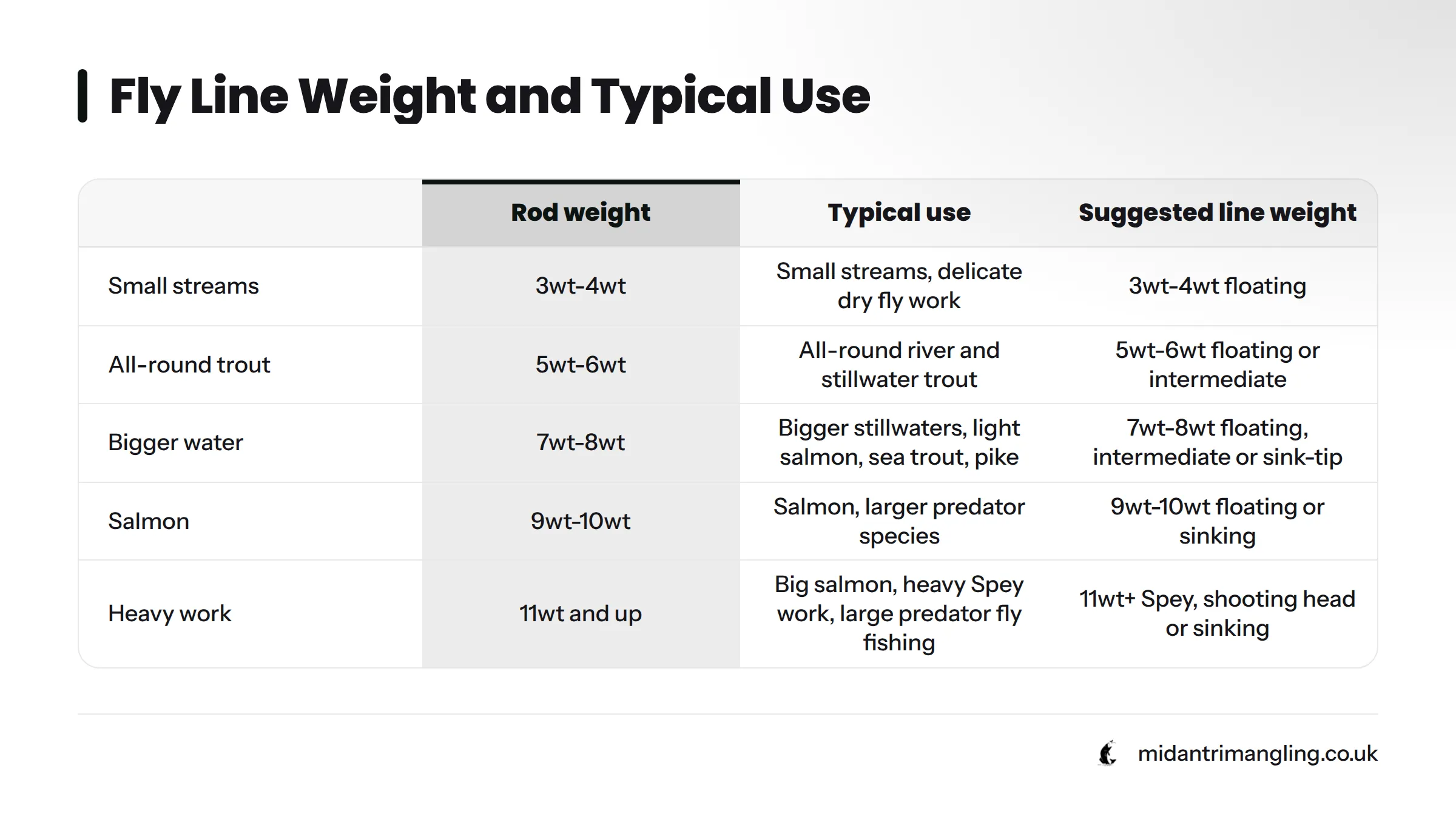
Here's the reference I give most people who come into the shop unsure what they're looking for.
| Rod weight | Typical use | Suggested line weight |
|---|---|---|
| 3wt-4wt | Small streams, delicate dry fly work | 3wt-4wt floating |
| 5wt-6wt | All-round river and stillwater trout | 5wt-6wt floating or intermediate |
| 7wt-8wt | Bigger stillwaters, light salmon, sea trout, pike | 7wt-8wt floating, intermediate or sink-tip |
| 9wt-10wt | Salmon, larger predator species | 9wt-10wt floating or sinking |
| 11wt and up | Big salmon, heavy Spey work, large predator fly fishing | 11wt+ Spey, shooting head or sinking |
Over-lining and under-lining
Some anglers deliberately go up or down a line weight from what the rod is rated for. There's genuine logic to it, not guesswork. Over-lining - putting a heavier line on a rod than its rating suggests - helps a softer-actioned rod load properly at short range, which suits small stream and delicate presentation work. Under-lining is less common, but some faster, stiffer modern rods benefit from it at distance. If you're newer to fly fishing, stick to the rated weight until you've got a season or two under your belt and understand what you're trying to achieve by changing it.
How Fly Line Taper Shapes Work
The taper is the shape of the line along its length, where the thick, heavy section sits relative to the thin running line. This is probably the most misunderstood part of fly line buying.
Weight-Forward (WF)
A weight-forward line has most of its weight concentrated in the front 30 to 40 feet, tapering down to a thinner running line behind it. This makes longer casts easier because the thin running line shoots through the rod guides with less friction once the heavy front section has loaded the rod. For most UK and Irish anglers on rivers, loughs or reservoirs, a weight-forward floating line is the sensible default. It's versatile, forgiving, and handles everything from delicate dry fly presentation to turning over a reasonably sized nymph rig.
Double Taper (DT)
A double taper has the same tapered profile at both ends, with a long, even belly in the middle. Because the weight spreads evenly along the line rather than concentrating at the front, double taper lines present flies very delicately at short to medium range. They're a favourite for traditional dry fly work on rivers. The practical bonus is that you can reverse the line on the spool once one end wears out, effectively doubling its working life. The trade-off is that DT lines don't shoot line anywhere near as efficiently as a weight-forward for long casts.
Shooting Heads and Running Lines
A shooting head is essentially just the heavy front taper section of a line - usually 30 to 40 feet long - connected to a separate thin running line or monofilament. This setup lets experienced casters achieve very long distances with relatively little effort, because there's minimal friction from a thick line passing through the guides. You'll see this system used in competition casting and in some salmon and sea trout fishing where distance matters more than delicate presentation.
Spey and Switch Lines
Spey lines are built for two-handed rods and the roll-cast-based Spey casting styles used widely on salmon rivers. They're generally longer and carry their weight further back than a standard single-handed weight-forward line, which helps load long rods using Spey, snap-T and similar casts without needing a conventional back cast. Switch lines sit between single-handed and full Spey lines, designed for shorter two-handed rods that can be cast overhead or with a single Spey stroke. If you're taking up salmon fishing on a river like the Bann system in Northern Ireland, it's worth talking to someone who knows the specific beat and typical casting distances before choosing a Spey line, because the right head length and grain weight vary considerably between rivers.
This video walks through the practical differences between taper shapes clearly:
Floating, Intermediate and Sinking Lines
This is where most newer fly anglers get confused, and it's genuinely straightforward once you see it laid out.
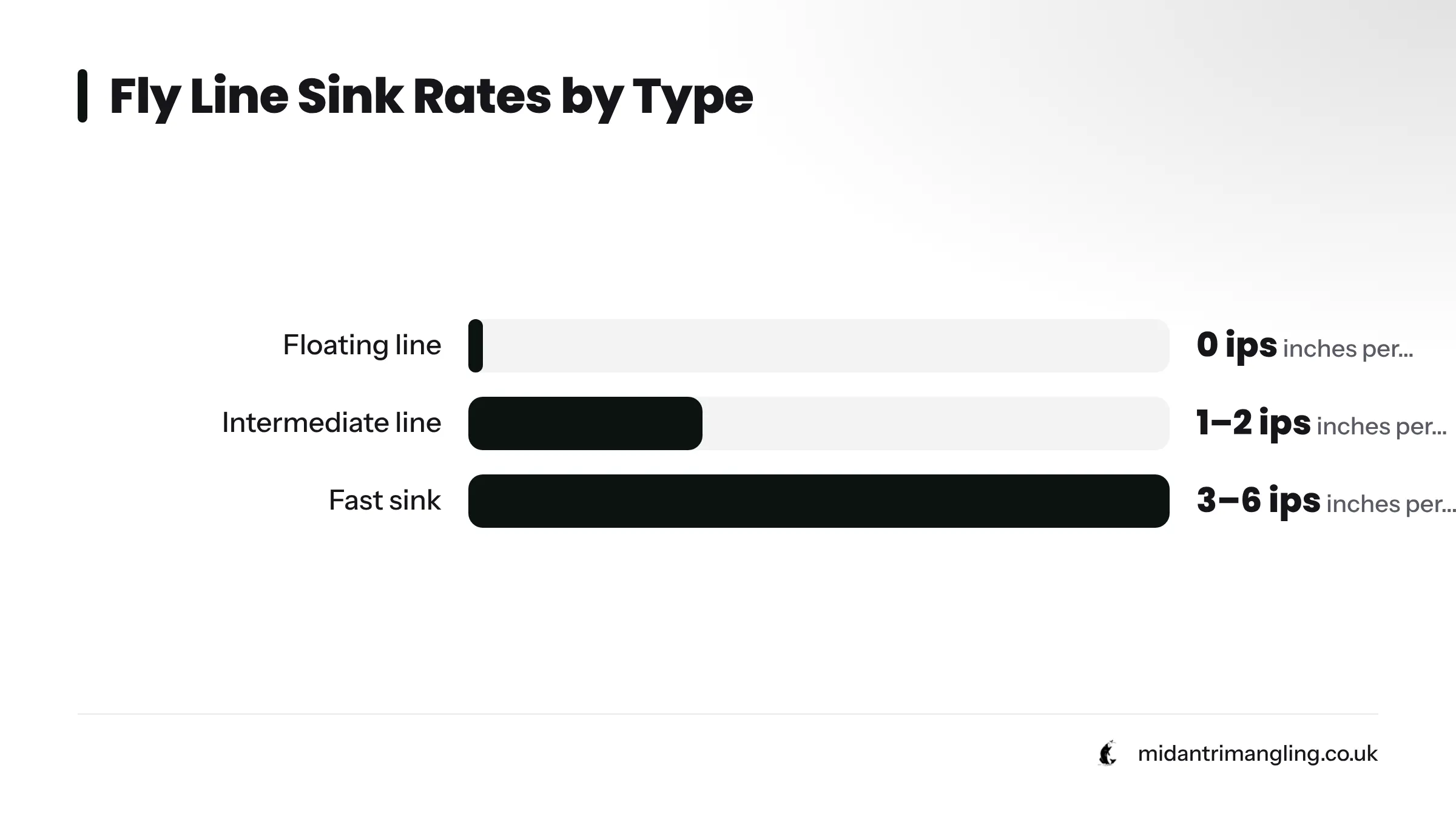
Floating lines sit on the surface and suit dry fly and most general trout fishing. Intermediate lines sink slowly and evenly to fish just under the surface. Sinking lines, including sink-tips, get the fly down to varying depths depending on how fast they sink.
Floating lines for dry fly and general use
A floating line is the right starting point for most river trout fishing, dry fly work and a large share of general stillwater fishing. It's the most versatile category of fly line and the one I'd recommend to anyone building their first outfit. Floating lines let you fish dries, nymphs under an indicator, and wet flies fished just under the surface film.
Intermediate lines for stillwater and sub-surface work
Intermediate lines sink very slowly and evenly, usually around 1 to 2 inches per second, keeping the fly just beneath the surface without the disturbance a floating line can sometimes cause in flat calm conditions. On Irish and UK stillwaters, particularly in warmer months when trout sit a little deeper, an intermediate line often keeps you in fish when anglers around you fishing a floater are blanking.
Sinking lines and sink-tips for depth
Full sinking lines and sink-tip lines - where only the front section sinks, with a floating or intermediate running line behind - are built to get flies down to specific depths. Manufacturers rate these by sink rate, expressed in inches per second (ips). The faster the sink rate, the deeper the fly gets in a given amount of time, which matters enormously when you're trying to find fish holding at a particular depth in a lough or reservoir.
| Line type | Approximate sink rate | Typical use |
|---|---|---|
| Floating | 0 ips (sits on surface) | Dry fly, nymphing, general trout |
| Intermediate | 1-2 ips | Stillwater trout just under the surface |
| Slow sinking (Type 2/3) | 2-3 ips | Stillwater, early season when fish are deeper |
| Fast sinking (Type 5/6) | 5-6 ips | Reservoir trout, deeper lough fishing |
| Extra fast / Type 7+ | 7+ ips | Deep stillwater, some salmon and predator work |
| Sink-tip | Varies by tip density | Combines floating running line with a sinking front section |
RIO's technical fly line pages publish detailed sink rate figures for their density-compensated sinking lines. It's worth checking a manufacturer's technical data sheet before buying if you need a specific depth, since sink rates vary between product ranges even within the same nominal Type classification.
Choosing the Right Fly Line for Your Species and Water
This is where it actually matters, because the right line depends far more on where and what you're fishing than on brand loyalty or marketing names.
River and stream trout
A weight-forward floating line in a 4wt to 6wt, depending on your rod, covers the vast majority of river trout fishing in Ireland and the UK. If you're fishing smaller streams with delicate presentation needs, a double taper in the same weight is worth considering for the softer turnover at short range.
Stillwater and lough trout
Lough and reservoir trout fishing benefits from having two or three lines available: a floater for calm days and dry fly or buzzer fishing, an intermediate for the middle of the day when fish sit just below the surface, and a slow sinker for windy days or when fish are holding deeper. Most Irish lough anglers I know carry at least a floating and an intermediate line as standard kit.
Salmon and sea trout
Salmon fishing generally calls for heavier lines - 7wt to 10wt depending on the river and time of year - often on Spey or switch setups for two-handed rods. Spring salmon fishing frequently needs a sinking tip to get the fly down in cold, high water, while summer and autumn fish often respond better to a floating line with a smaller fly. Sea trout fishing, particularly at night, tends to favour floating or intermediate lines depending on water height and temperature. Anyone fishing for salmon on Northern Ireland's rivers should check current byelaws and licensing requirements with the Loughs Agency, which manages salmon and sea trout fisheries across the Foyle and Carlingford catchments, since regulations and seasons can change between years.
Euro nymphing
Euro nymphing, sometimes called Czech or French nymphing depending on the specific style, typically uses a thin, level or slightly tapered "euro line" rather than a conventional tapered fly line, often in combination with a long leader and a sighter section. These specialist lines are much thinner in diameter than standard fly lines, reducing sag and improving direct contact with the flies. If you're moving into this style of fishing, buy a dedicated euro nymphing line rather than trying to adapt a standard weight-forward floater, because the difference in contact and depth control is significant.
Pike and predator fly fishing
Pike on the fly has grown hugely in popularity on Irish and UK waters in recent years. Heavier floating or intermediate lines in 8wt to 10wt, designed to turn over large, wind-resistant flies, are the standard choice, with some anglers carrying a fast sinking line for deeper, coloured water.
Here's a simple decision framework if you're still not sure where to start:
- Rod weight first - match your line weight number to your rod's rating.
- Water type second - river, stillwater, or both?
- Target species third - trout, salmon, sea trout, pike?
- Budget last - decide how many lines you actually need before worrying about which brand.
The Leading Fly Line Brands
I stock a wide spread of brands at Mid Antrim Angling precisely because no single manufacturer makes the right line for every situation. Here's where each brand sits.
| Brand | Notable ranges | Taper styles | Typical price tier | Best suited to |
|---|---|---|---|---|
| RIO | Gold, Elite, InTouch | WF, DT, Spey, shooting heads | Mid to premium | All-round trout, salmon, Spey casters wanting precise sink rate control |
| Airflo | SuperFlo, Ridge | WF, DT, Spey | Mid to premium | Anglers wanting PVC-free, more sustainable line construction |
| Scientific Anglers | Amplitude, Magnitude, Sonar | WF, DT, Spey, sinking | Mid to premium | Anglers wanting named product families and a wide depth-rated sinking range |
| Greys | GT Line range | WF, DT | Budget to mid | Beginners and anglers wanting dependable performance without premium pricing |
| Cortland | 444 series | WF, DT | Budget to mid | Traditional dry fly anglers, double taper fans, value-conscious buyers |
RIO
RIO has built a reputation on precise, well-documented sink rates and a huge range covering everything from delicate trout lines to serious Spey and saltwater tapers. Their technical data is some of the most detailed in the industry, which makes RIO lines a sensible choice when you need a specific, known sink rate for stillwater or river work.
Airflo
Airflo, a British company, has pushed harder than most into PVC-free, more environmentally considered line construction without sacrificing performance, alongside their Ridge texture technology designed to reduce friction through the guides. Worth considering if sustainability matters to your buying decision alongside performance.
Scientific Anglers
Scientific Anglers organises its lines into clear named families: Amplitude for general performance, Magnitude for distance and power, Sonar for an extensive sinking line range. That naming system makes it easier to know roughly what you're buying even before reading the small print.
Greys
Greys offers dependable, well-made lines at a more accessible price point, which makes them a sensible choice for beginners or for anyone building a second or third line without wanting to spend premium money on every spool.
Cortland
Cortland has been making fly lines since the 1950s and their 444 series remains a genuine favourite among traditional dry fly anglers who prefer a double taper for delicate presentation work at value pricing.
Budget Versus Premium Lines: Does the Price Difference Matter?
A well-made budget line from a reputable manufacturer like Greys or Cortland will cast perfectly well and catch plenty of fish. Premium lines from RIO, Airflo or Scientific Anglers tend to last longer, shoot further with less effort, and hold their slickness and flotation better over a season of hard use.
The honest truth is that the gap between a decent budget line and a premium one has narrowed considerably over the years as coating technology has improved across the board. Where premium lines genuinely earn their price is in coating durability - how well they resist cracking and memory coiling, and how consistently they perform after repeated use in cold water. If you're fishing occasionally, a budget line is perfectly good value. If you're out several times a week through a full season, the premium coatings tend to pay for themselves in longevity.
For value for money, I'd point most anglers towards a mid-tier weight-forward floating line from a brand like Greys or the more accessible end of the RIO and Scientific Anglers ranges. You get genuine performance without paying for every incremental feature aimed at tournament casters.
Looking After Your Fly Line
A fly line is one of the most neglected bits of kit in most anglers' bags, and it's also one of the cheapest things you can do to improve your casting and presentation.
Cleaning and dressing
Wipe your line down with a soft cloth and proper fly line cleaner every few outings, more often if you're fishing coloured or weedy water. Dirt and algae build up in the coating and genuinely reduce both flotation and how smoothly the line shoots through the guides. A clean, dressed floating line will sit higher and cast further than a dirty one.
Storage between seasons
Store fly lines loosely coiled, away from direct sunlight and extreme heat, which can degrade the coating and core over time. Avoid leaving lines tightly wound on a reel in a hot car boot for long periods, since that's one of the most common causes of memory coils and premature cracking.
When to replace your line
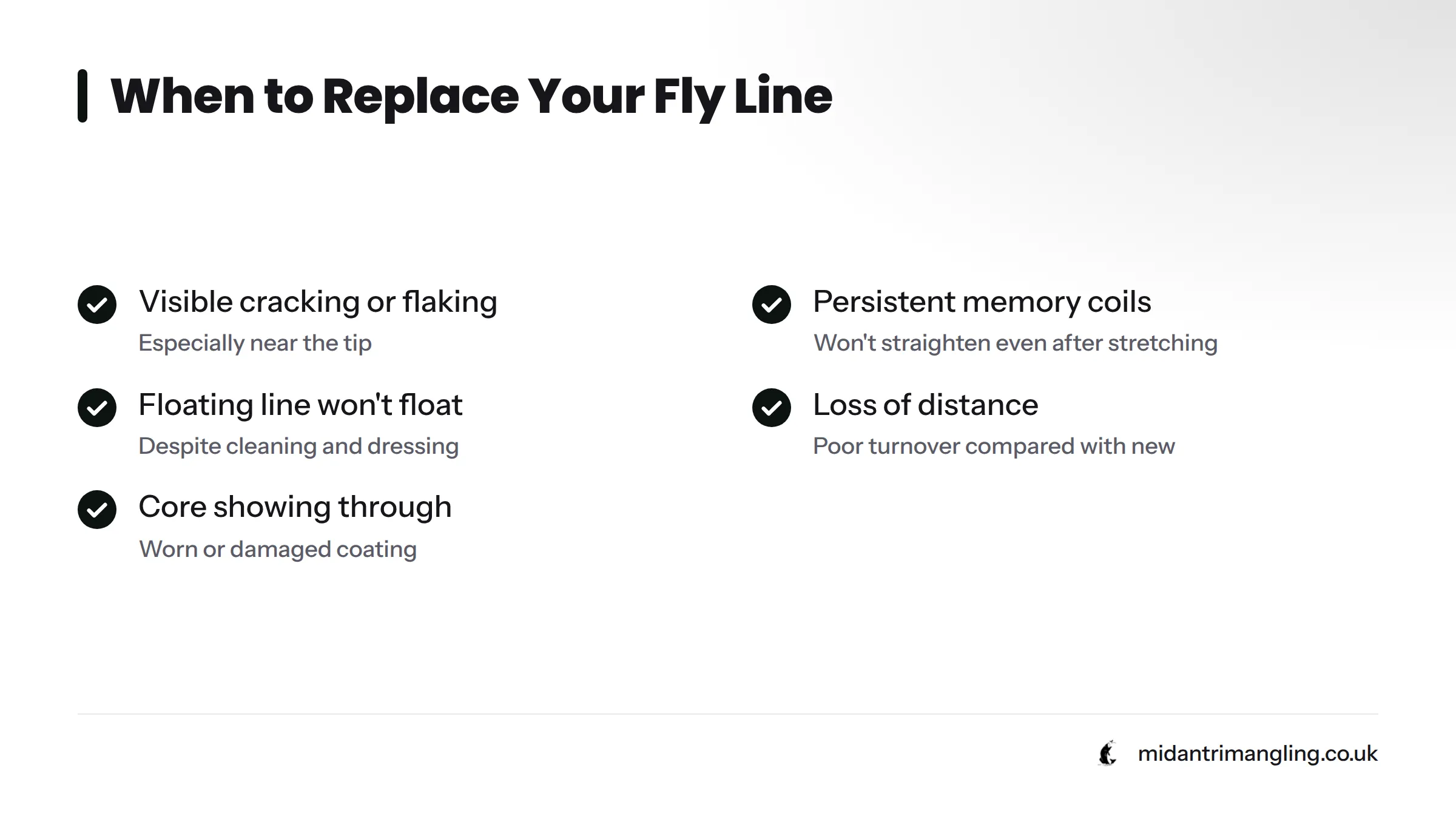
Replace your line if you notice:
- Visible cracking or flaking in the coating, especially near the tip
- Persistent memory coils that won't straighten out even after stretching
- A floating line that won't float no matter how well it's cleaned and dressed
- Noticeable loss of distance or poor turnover compared with when the line was new
- A core showing through a worn or damaged coating
Most lines used regularly need replacing every two to four seasons, depending on how often they're fished and how well they're looked after. Occasional use stretches that considerably further.
Common Fly Line Problems and Quick Fixes
- Line not shooting through the guides - usually dirt build-up or a damaged coating. Clean thoroughly and check for nicks near the tip.
- Memory coils that won't straighten - stretch the line gently by hand before fishing, and avoid storing it tightly wound in heat.
- Floating line sinking - clean and re-dress with a proper floatant-based line cleaner. UV exposure and algae build-up are the usual culprits.
- Poor loading or a rod that feels dead - check the line weight matches the rod rating. A line that's too light for the rod is a very common cause.
- Cracking near the tip - often caused by repeated hard false casting or standing on the line. Trim back the damaged section if it's minor, or replace if it's widespread.
- Line twisting badly - usually a leader or swivel issue rather than the fly line itself, but check the line isn't damaged where it meets the leader loop.
Setting Up Your Fly Line: Backing, Leader and Loops
Getting backing, fly line and leader connected properly isn't difficult, but it's worth doing once carefully rather than rushing it.
- Fill the reel with backing first. Braided Dacron backing is standard; the amount depends on reel arbor size and line weight, but most trout reels take somewhere between 50 and 100 yards.
- Attach the backing to the fly line using an Albright knot or a loop-to-loop connection if your line already has a welded loop at the back end, which most modern lines do.
- Wind the fly line onto the reel under light tension, checking it lies evenly across the spool.
- Attach the leader to the front of the fly line using a loop-to-loop connection if the line has a welded front loop, or a nail knot if it doesn't.
- Attach the tippet to the leader, either by tying a fresh length directly on or using a tippet ring for easier changes.
- Check the whole connection by pulling firmly before you start fishing, since a weak join here is the single most common cause of losing a decent fish.
Getting this right the first time saves a lot of frustration streamside and is exactly the kind of basic groundwork that separates a frustrating day from a productive one.
Fly Line Questions Answered
What is the best fly line to use? There's no single "best" line for every situation. For most UK and Irish trout fishing, a quality weight-forward floating line matched correctly to your rod's weight rating is the best all-round choice, with an intermediate line as a sensible second option for stillwater work.
What offers the best value for money? A mid-tier weight-forward floating line from Greys or the entry-level ranges from RIO or Scientific Anglers offers the best balance of genuine performance and price for most anglers.
Are cheap fly lines any good? Yes, provided they come from a reputable manufacturer. Budget lines from established brands cast and present flies well; the main difference versus premium lines is usually coating durability and how well they perform over a full season of hard use.
What line weight do I need for my rod? Match the number printed on your rod (its AFTM or "wt" rating) to the same number on the fly line box. A rod rated #6 needs a 6wt line in the vast majority of situations.
What's the difference between weight-forward and double taper lines? A weight-forward line carries most of its weight in the front 30 to 40 feet, making it easier to cast long distances. A double taper spreads weight evenly for delicate presentation at shorter range and can be reversed on the spool to extend its working life.
How do I know if I need a floating or sinking line? Choose a floating line for dry fly fishing, most river trout work and general stillwater fishing. Choose an intermediate or sinking line when fish are holding below the surface, which is common on stillwaters, reservoirs and in deeper or coloured water.
How long does a fly line last? Most regularly used lines last two to four seasons before needing replacement, depending on care, storage and how often they're fished. Occasional use extends that lifespan considerably.
Can I use any fly line on any reel? Almost any reel will physically hold almost any line weight within a reasonable range, but it's best practice to match the line weight to both the rod and the reel's rated capacity to keep the outfit balanced and avoid overloading the reel's backing capacity.
What's the best all-round fly line for a beginner? A weight-forward floating line in the weight matched to your rod is the sensible starting point for almost every beginner, whether you're fishing rivers or stillwaters.
This beginner-focused video covers the decision-making process for a first fly line in a practical way:
Choosing a fly line doesn't need to be complicated once you understand what the numbers and letters on the box actually mean. Match the weight to your rod, pick the right taper and sink rate for your water and target species, and look after the line once you've bought it. Do those three things and you'll spend a lot less time fighting your tackle and a lot more time actually fishing. If you're ever unsure what you need for a specific river, lough or species, that's exactly the kind of question I'm happy to talk through at Mid Antrim Angling.


