
I get asked about Bann Valley Flies more than almost any other fly brand on the shop floor, and it's not hard to see why. Search online and you'll find a bare product list, a Facebook caption or two, and not much else. No one has actually explained what the brand is, whether the tying holds up in practice, or which patterns deserve a place in your box. After over 40 years fishing loughs and rivers across Ireland, Scotland, Scandinavia and Canada, and stocking this brand alongside Caledonia Fly Company and Frankie McPhillips at Mid Antrim Angling, I want to put that right.
This is an honest look at the range: what each category of fly is for, how the tying stacks up against other Irish and UK brands, and where these flies genuinely earn their place on your leader.
What Bann Valley Flies Actually Is
Bann Valley Flies is a Northern Ireland fly tying brand producing trout, salmon and seatrout patterns, alongside a growing range of bass and pike flies for saltwater and freshwater predator fishing. The name comes from the River Bann, the longest river in Northern Ireland, which flows from the Mourne Mountains through Lough Neagh and out to the Atlantic at Coleraine. That river system and the lough country it feeds has shaped fly patterns in this part of the world for generations.
Deep Roots in Northern Ireland Fishing
Northern Ireland has one of the richest wet fly traditions in these islands, built around loughs like Neagh and Erne and the smaller trout waters scattered through Antrim, Fermanagh and Tyrone. Bann Valley sits squarely in that tradition. Its range leans heavily on lough-style wet flies, dabblers and mayfly patterns designed for drifting a boat and fishing a team of flies on the bob, rather than the emphasis on nymphing tactics you'd see from some English stillwater-focused brands. The Loughs Agency, which manages fisheries across the Foyle and Carlingford catchments, gives some sense of how seriously this region takes its fisheries and why fly development here has stayed so active.
The Species and Techniques They Cover
The catalogue covers a wide spread of species. Trout flies for lough and river fishing make up the bulk of the range, with salmon and seatrout patterns tied on both single hooks and tubes for the back end of the season. More recently the brand has expanded into saltwater bass flies and pike patterns, reflecting a wider trend across Irish and UK fly brands as more anglers chase predatory species on fly tackle alongside trout and salmon fishing.
Breaking Down the Bann Valley Range
Understanding what each category is for makes choosing flies far simpler, especially if you're newer to lough or river fly fishing.
Lough Wets
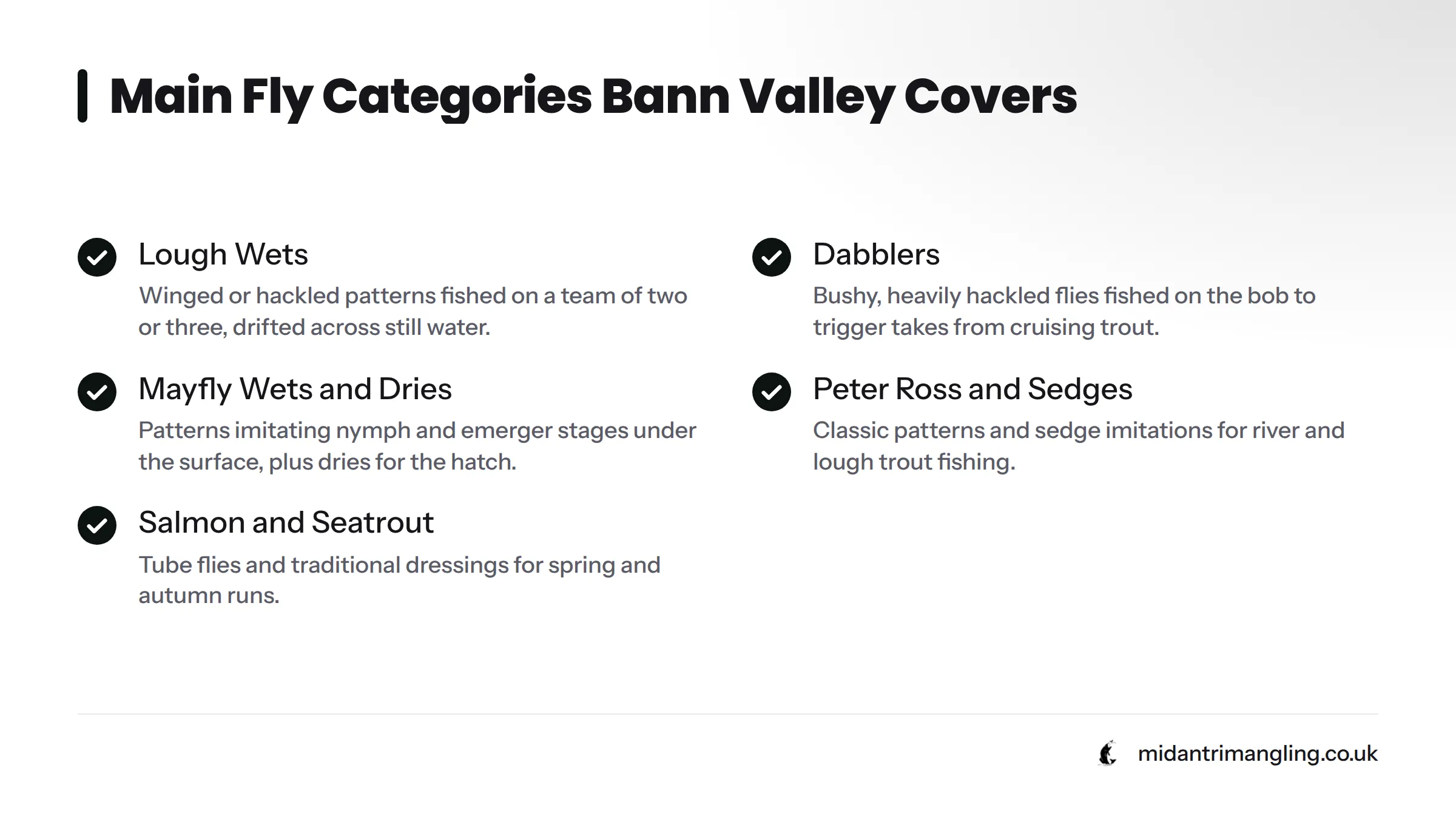
Lough wets are the backbone of Irish and Scottish stillwater fly fishing: traditional winged or hackled patterns fished on a team of two or three, drifted across a lough from a boat or cast from the bank. Bann Valley's selection includes long-standing patterns alongside modern colour variants, tied to fish static or on a figure-of-eight retrieve as trout move through the drift.
Dabblers
A dabbler is a bushy, heavily hackled wet fly fished in the top dropper position, known as the bob. Fished there, it can be skated or dibbled across the surface film to trigger a take from a cruising trout. Dabblers are a genuinely distinctive part of Irish and Scottish lough fishing, and Bann Valley ties a solid spread of colour variations, from traditional claret and bibio-style dressings through to brighter versions for coloured water.
Mayfly Wets and Dries
Mayfly patterns cover the short but intense window each year when large upwinged flies hatch on richer limestone and lough systems. Bann Valley's mayfly wets imitate the nymph and emerger stages fished just under the surface, while the dries sit on top and need a drag-free presentation to fool fish that have seen plenty of naturals by the time the hatch is in full swing. Their UV mayfly selection is worth a mention here - the brand has specifically built contrast into these patterns using UV-reactive materials, something they've demonstrated in their own product video.
Watch Bann Valley's short clip on their UV mayfly selection to see the construction and contrast up close: https://www.youtube.com/watch?v=diDJrvpnJAc
Peter Ross and Sedges
The Peter Ross is one of the most recognised wet flies in British and Irish fly fishing, built around a silver tinsel body and a slip of red seal's fur at the tail. Bann Valley's version follows that classic recipe. Sedge patterns sit alongside these, imitating caddis flies that trout take avidly at dusk through summer, usually fished with a gentle twitch to mimic a fluttering natural.
Buzzers and Nymphs
Buzzers imitate the pupal stage of non-biting midges, which make up a huge part of a stillwater trout's diet for most of the season. Bann Valley's buzzer range runs through a spread of sizes and colours to cover different hatches, typically fished static or on a very slow retrieve under an indicator or on a washing-line rig. General nymph patterns cover everything from simple pheasant tail dressings to more suggestive bugs for searching the water when nothing is obviously hatching.
Depth Charge and Czech Nymphs
A Czech nymph is a heavily weighted, slim-bodied nymph designed to get down fast and stay in contact with the bottom in faster currents - a technique developed for competition river fishing in the 1980s. Bann Valley's Depth Charge range uses tungsten beadheads to achieve that quick sink rate, which makes them genuinely useful for drawing trout out of deeper lough margins or faster river glides where standard wets simply won't get down in time.
CDC Dry Flies and Dry Flies
CDC, or cul de canard, is the feather from around a duck's preen gland. Fly tyers prize it for its natural water-shedding properties and the way it traps air bubbles for buoyancy without heavy floatant. Bann Valley's CDC dry flies use this material for emerger and dun patterns that sit low in the surface film - often exactly where fussy trout want to see them. The standard dry fly range covers more traditional hackled patterns for faster water and general searching.
Lures and Mini Lures
Lures are the attractor patterns of the fly box: brighter, often larger flies fished on a steady or fast retrieve to provoke a reaction take rather than imitate anything specific. Bann Valley's mini lures scale that down for pressured stillwater fisheries where fish have grown wary of anything too large or gaudy - a sensible move given how heavily some day-ticket waters get fished through the season.
Tube Flies and Salmon Flies
Tube flies thread onto a separate treble or single hook, which lets the dressing move independently of the hook and makes it easy to change hook size without retying the whole fly. This format is widely used for both salmon and seatrout. Bann Valley's salmon fly range includes traditional dressings alongside tube-mounted patterns suited to bigger, coloured rivers in early season and smaller, more sparsely dressed flies for low summer water.
Selection Packs and the Monthly Fly Club
Selection packs group flies by season, species or water type, which takes the guesswork out of building a box from scratch. Bann Valley also runs a subscription-style "fly club" pack, sent out on a recurring basis with a curated mix of patterns - a genuinely useful way for newer anglers to build a varied box over a season without learning the whole range at once.
Here's how the main categories break down by target species, water type and timing:
| Pattern Category | Target Species | Best Water Type | Best Season |
|---|---|---|---|
| Lough Wets | Trout | Still water (lough) | April to September |
| Dabblers | Trout | Still water, boat drift | May to August |
| Mayfly Wets/Dries | Trout | Lough and rich river | Late May to mid-June |
| Peters and Sedges | Trout | Lough and river | June to September |
| Buzzers | Trout | Still water | April to October |
| Nymphs | Trout | River and lough margin | April to September |
| Depth Charge/Czech Nymphs | Trout | Faster river, deep lough edge | All season |
| CDC Dry Flies | Trout | River, calm lough | May to September |
| Lures/Mini Lures | Trout, stocked fisheries | Still water | March to November |
| Tube Flies/Salmon Flies | Salmon, seatrout | River | Spring and autumn runs |
Tying Standard and Quality: What You Actually Get
Materials and Construction
Bann Valley flies use standard, recognisable tying materials: tinsel, seal's fur substitutes, CDC, marabou, tungsten beads and quality hooks - the same building blocks you'd find in ranges from Veniard or Fulling Mill. Proportions on the patterns I've handled through the shop are consistent, heads are neat and varnished properly, and whip finishes are secure rather than just dabbed with glue and hoped for. That consistency matters more than it sounds, because a fly tied slightly heavy or with a poorly seated hook will fish differently from the next one in the packet, which undermines confidence exactly when you need it most.
How They Hold Up on the Water
Wing and hackle materials on the wet fly range have held together well across normal use from handling and selling this stock. Heads stay intact after a few fish rather than unravelling at the first sharp take. Tungsten beadhead nymphs are a hardier construction generally, since the weight is fixed and there's less delicate material to damage. As with any tied fly from any manufacturer, sharp pike teeth, snags on bankside vegetation or repeated contact with zander or bass teeth will shorten the life of softer-bodied patterns, so match your tippet strength and playing technique to the fish you're actually targeting.
Who Should Fish Bann Valley Flies?
Both beginners and experienced anglers, though for slightly different reasons. Beginners benefit from the clear category structure and selection packs, which remove a lot of early decision-making that can be overwhelming when you're looking at a wall of fly boxes for the first time. Experienced anglers benefit from the breadth of the range and the fact that classic patterns like the Peter Ross, dabblers and Czech nymphs sit alongside more modern UV and mini lure ties, giving you room to experiment without hunting across three different brands.
Good fit if you:
- Fish Irish or Scottish loughs regularly and want a reliable, well-priced source of lough wets and dabblers
- Want a structured way to build a season's fly box through a selection pack or subscription
- Fish mayfly season and want both imitative wets and UV-enhanced dries
- Target salmon or seatrout on tube flies and want sensible early and late season dressings
- Are newer to fly fishing and want clearly labelled, category-based patterns rather than a confusing mixed box
Consider alternatives if you:
- Tie your own flies and only need raw materials rather than finished patterns
- Fish very technical, heavily pressured chalk streams where ultra-specific regional patterns matter more than general lough or river ties
- Need a narrow, highly specialised range for one specific technique, such as competition-style French leader nymphing, where a dedicated competition brand may offer a tighter selection
How Bann Valley Compares to Other Irish and UK Brands
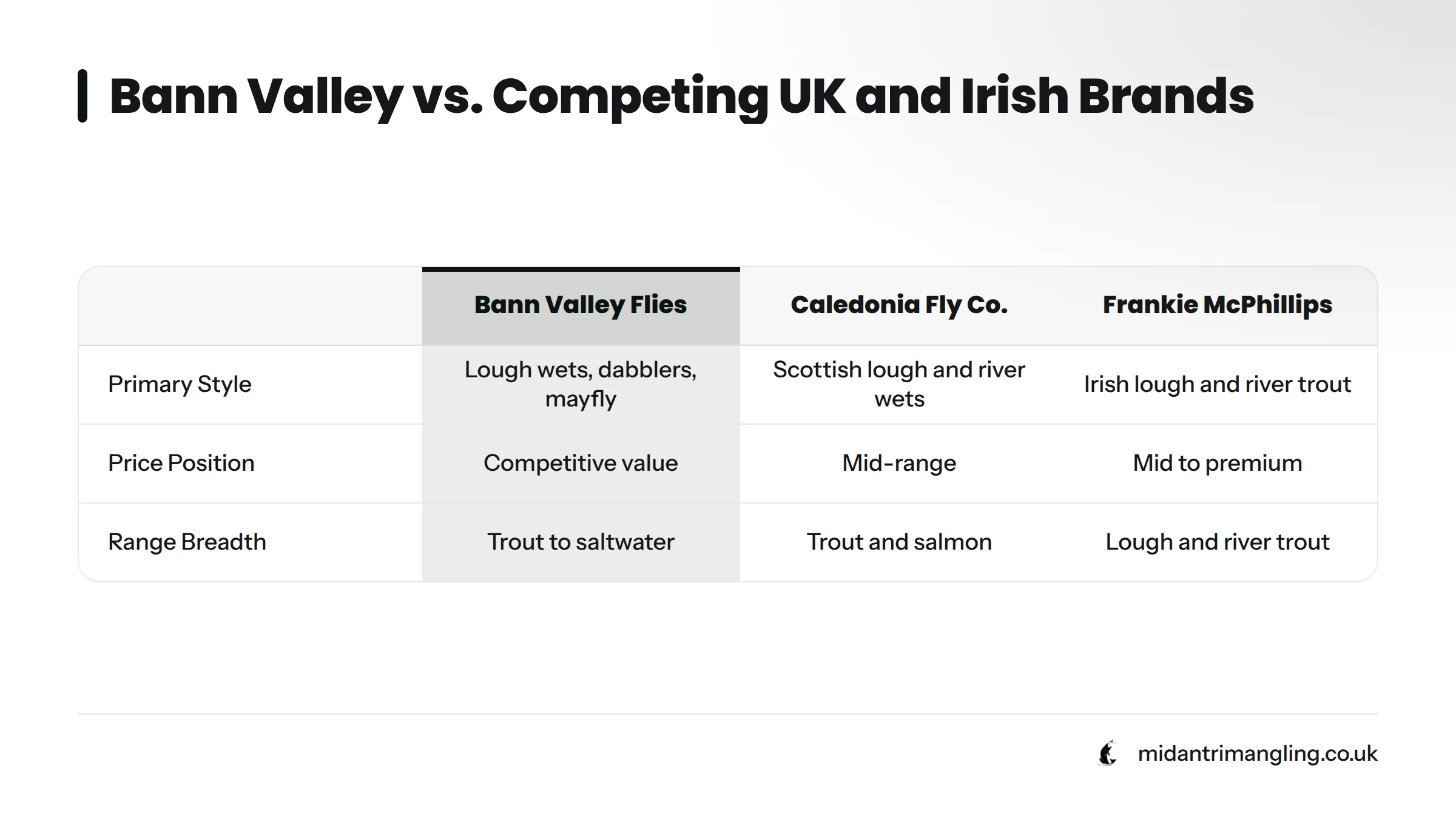
I stock Bann Valley alongside Caledonia Fly Company and Frankie McPhillips flies, which gives me a fair vantage point for comparing them honestly rather than guessing from a catalogue page.
| Brand | Style Focus | Price Positioning | Range Breadth |
|---|---|---|---|
| Bann Valley Flies | Lough wets, dabblers, mayfly, salmon/seatrout, growing bass and pike range | Competitive, strong value for the tying standard | Very broad, covers trout through to saltwater |
| Caledonia Fly Company | Scottish lough and river style, strong on traditional wets | Mid-range | Broad, trout and salmon focused |
| Frankie McPhillips | Irish-tied patterns, strong reputation among lough anglers | Mid to slightly premium | Good depth on lough and river trout flies |
| Fulling Mill | International sourcing, huge catalogue, strong on nymphs and buzzers | Wider price range, premium lines available | Extremely broad, global species coverage |
Where Bann Valley stands out is the combination of breadth and value. You get a genuinely wide species and technique coverage, from traditional dabblers through to tungsten Czech nymphs and tube flies, without paying the premium that some of the bigger international catalogues carry on their top-end ranges. Caledonia Fly Company and Frankie McPhillips both tie excellent, reliable patterns and I'm glad to stock all three, but if you want one brand that covers lough trout, river nymphing, mayfly season and salmon fishing without having to shop around, Bann Valley is the one I'd recommend first.
Best Bann Valley Patterns by Fishing Situation
For Lough Trout
Build a team around a dabbler on the bob, a lough wet such as a bibio or claret style pattern in the middle, and a smaller wet or buzzer on the point. This covers most lough conditions from April through September. Adjust size and colour for light levels: darker, bulkier patterns on overcast days with a ripple, smaller and sparser dressings in bright, calm conditions.
For Mayfly Season
Mayfly wets fished just under the surface work well as the hatch builds. Move to the mayfly dries and UV-enhanced versions once naturals are up and fish are looking upward. This window is short - typically late May into mid-June on most Irish loughs - so it pays to have both stages covered rather than committing to dries too early.
For Salmon and Seatrout
Tube flies suit bigger, coloured spring water where you want to present a larger profile without using a heavy single hook. Smaller, sparser salmon flies and seatrout patterns come into their own as rivers drop and clear through summer and into the autumn run.
For Buzzer and Still Water Nymph Fishing
Buzzers fished static or on an achingly slow figure-of-eight under an indicator, or on a washing-line rig with a boobie or lure on the point, cover the bulk of stillwater nymph fishing from April right through to October. Switch to the Depth Charge tungsten nymphs when fish are holding deep, particularly in low light or after a cold snap pushes them off the margins.
Not sure where to start? Pick by target species:
- Lough trout: dabblers, lough wets, buzzers
- River trout: Czech nymphs, CDC dries, Peters and sedges
- Mayfly season: mayfly wets, then mayfly dries
- Salmon/seatrout: tube flies, traditional salmon dressings
- Pike/bass: the newer saltwater and predator range
Strengths and Limitations
Strengths:
- Genuinely broad range covering trout, salmon, seatrout, bass and pike from one brand
- Strong, consistent tying standard with neat heads and secure finishes
- Good value relative to premium international catalogues
- Clear category structure that suits beginners without boring experienced anglers
- Selection packs and a subscription fly club make building a box straightforward
- Strong heritage in lough-style patterns like dabblers and lough wets - a genuinely Irish specialism
Limitations:
- The brand's website offers almost no educational content, so you need outside guidance to choose confidently
- Some very specific technical river techniques may be better served by a narrower, specialist competition brand
- As with any tied fly, softer-bodied patterns will wear faster against pike, zander or bass teeth than tungsten nymphs or tube flies
Where to Buy Bann Valley Flies
Bann Valley flies are available through the brand's own online dealer platform and through stocked tackle shops across Northern Ireland and further afield. We carry a selection here at Mid Antrim Angling in Ballymena, alongside Caledonia Fly Company and Frankie McPhillips, so you can compare patterns side by side rather than ordering blind from a product photo.
Buying Direct vs. From a Retailer
Buying directly from the manufacturer gives you access to the full catalogue and any subscription packs, but you're choosing from photos alone with no one to ask about sizing, colour choice for your local water, or how a pattern has performed through the shop. Buying from a stocked retailer like ours means you can see the actual fly, ask about which dabbler colour suits a coloured lough versus clear water, and pick up leader material, tippet and the right fly line for the technique in the same visit.
If you're building a stillwater or river outfit from scratch, read through our complete fly lines guide to make sure the line you're casting these patterns on actually suits the technique, whether that's a floating line for dabblers on the bob or an intermediate for buzzers fished deeper.
How to Fish These Flies Effectively
Dabblers on the Bob
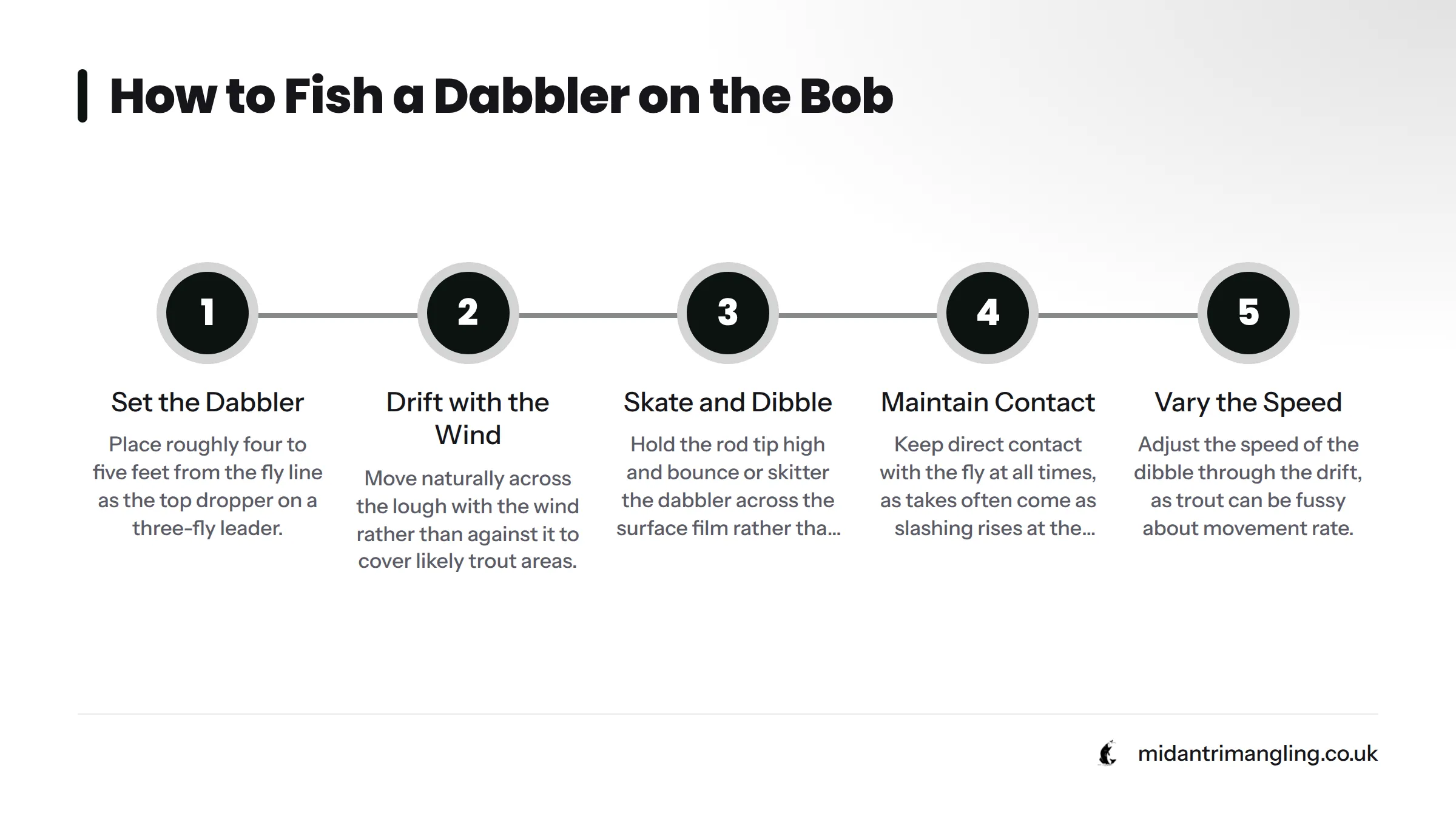
Fishing a dabbler on the top dropper, known as the bob position, is a distinctly Irish and Scottish technique and it's worth doing properly rather than just tying one on and hoping.
- Set the dabbler roughly four to five feet from the fly line as the top dropper on a three-fly leader.
- Drift across the lough with the wind rather than against it, so the boat moves naturally across likely trout holding areas.
- Hold the rod tip high and skate or dibble the dabbler across the surface film, letting it bounce and skitter rather than sit still.
- Keep direct contact with the fly at all times - takes often come as a slashing rise right at the surface and a slack line means a missed fish.
- Vary the speed of the dibble through the drift, since trout can be fussy about how fast a dabbler is moving on any given day.
Buzzers and Depth Control
Buzzers need careful depth control to work properly. Fish them under a strike indicator set to hold the flies just above where you believe trout are feeding, adjusting depth through the day as fish move up or down in the water column with light and temperature. On a washing-line rig, a buoyant fly on the point holds a team of buzzers just under the surface, which works particularly well during a hatch when fish are looking up but not quite ready to take a dry.
Takes on buzzers are often gentle, so watch your indicator or line closely rather than waiting to feel a pull.
Watch Ryan Houston's tying video on the Bann Valley Fiery Brown wet fly to see how a classic pattern from this range comes together. It's genuinely useful for both the history of the colour and the construction itself: https://www.youtube.com/watch?v=VGSLnos5GvI
Questions Anglers Ask
What is Bann Valley Flies? Bann Valley Flies is a Northern Ireland fly tying brand producing trout, salmon, seatrout, bass and pike patterns, with a range built around lough-style wets, dabblers, mayfly patterns, nymphs, dry flies and tube flies.
Where are Bann Valley Flies made? The brand is based in Northern Ireland, taking its name from the River Bann, and its pattern range reflects the lough and river fishing traditions of that region.
Are Bann Valley Flies good quality? Based on the stock I've handled through the shop, the tying standard is consistent, with neat heads, secure whip finishes and proportions that match what you'd expect from established Irish and UK fly brands like Caledonia Fly Company or Frankie McPhillips.
What species can you catch with Bann Valley flies? Trout, salmon and seatrout make up the core of the range, with an expanding selection of bass and pike flies for saltwater and predator fishing.
What is a dabbler fly used for? A dabbler is a heavily hackled wet fly fished on the top dropper, or bob position, and skated across the surface to provoke a slashing take from lough trout.
What's the difference between lough wets and mayfly wets? Lough wets are general, year-round patterns fished as a team on still water, while mayfly wets specifically imitate mayfly nymphs and emergers during the short mayfly hatch window each late spring.
Are Bann Valley flies suitable for beginners? Yes. The category structure and selection packs make it easy for a newer angler to build a sensible box without needing to understand every pattern individually first.
How much do Bann Valley flies cost? Pricing varies by category and pack size, with individual flies and selection packs positioned competitively against other mid-range Irish and UK tied fly brands. Check current stock and pricing with your local retailer for exact figures.
Where can I buy Bann Valley flies in the UK? Through the brand's own online dealer platform and through stocked tackle shops, including Mid Antrim Angling in Ballymena, where you can see the actual patterns before buying.
How do Bann Valley flies compare to Caledonia Fly Company or Frankie McPhillips flies? All three are solid, well-tied Irish and UK brands. Bann Valley offers the broadest species coverage and strong value, Caledonia Fly Company leans into traditional Scottish lough and river style, and Frankie McPhillips has a strong reputation specifically among Irish lough trout anglers.
What is the Bann Valley monthly fly pack or "fly club"? It's a subscription-style selection pack sent out on a recurring basis with a curated mix of patterns - a useful way to build a varied fly box progressively over a season.
Are Bann Valley flies good for salmon and seatrout fishing? Yes, the range includes both tube flies for bigger, coloured early season water and traditional, more sparsely dressed patterns suited to low, clear summer conditions.
What hook sizes do Bann Valley flies come in? Hook sizes vary by category, running from small buzzers and nymphs for stillwater trout through to larger tube flies and salmon hooks for bigger river work, matching standard sizing conventions used across the trade.
Final Word
Yes, I'd recommend Bann Valley Flies with real confidence. The tying standard holds up, the range genuinely covers lough trout, river nymphing, mayfly season, salmon, seatrout and now bass and pike, and the pricing sits well against other established Irish and UK brands. What's been missing until now is simply the information to buy with confidence, since the brand's own site barely explains itself.
Having stocked Bann Valley alongside Caledonia Fly Company and Frankie McPhillips, I'd happily suggest starting with a dabbler and lough wet selection if you fish Irish or Scottish still waters, moving on to the Czech nymphs and CDC dries if your fishing takes you onto rivers too. Come in and have a look at what we've got on the shelf at Mid Antrim Angling, or get in touch if you want advice on which selection suits your local water before you buy.


